


In November 1942, one of the West’s most formidable spymasters escaped from occupied France over the Pyrenees, finding herself tracing the same exfiltration route she had taught her agents. It started in Perpignan, climbed through the mountain pass at Mantet, and ended in friendlier Spanish territory. On top of it all, she had lost her left leg years earlier and walked on a prosthetic she nicknamed “Cuthbert.”
Three weeks ago, to honor Virginia Hall’s service, I retraced what we believe was her route with a small group of former American and British intelligence officers. Two young women who hope to become the next generation of CIA officers came with us. Many of you raised the money to send them. Here is my trip report, so you can see what your support made possible. We’re planning the next hike for this spring. Sending one young person costs about $4,300, and any amount helps.
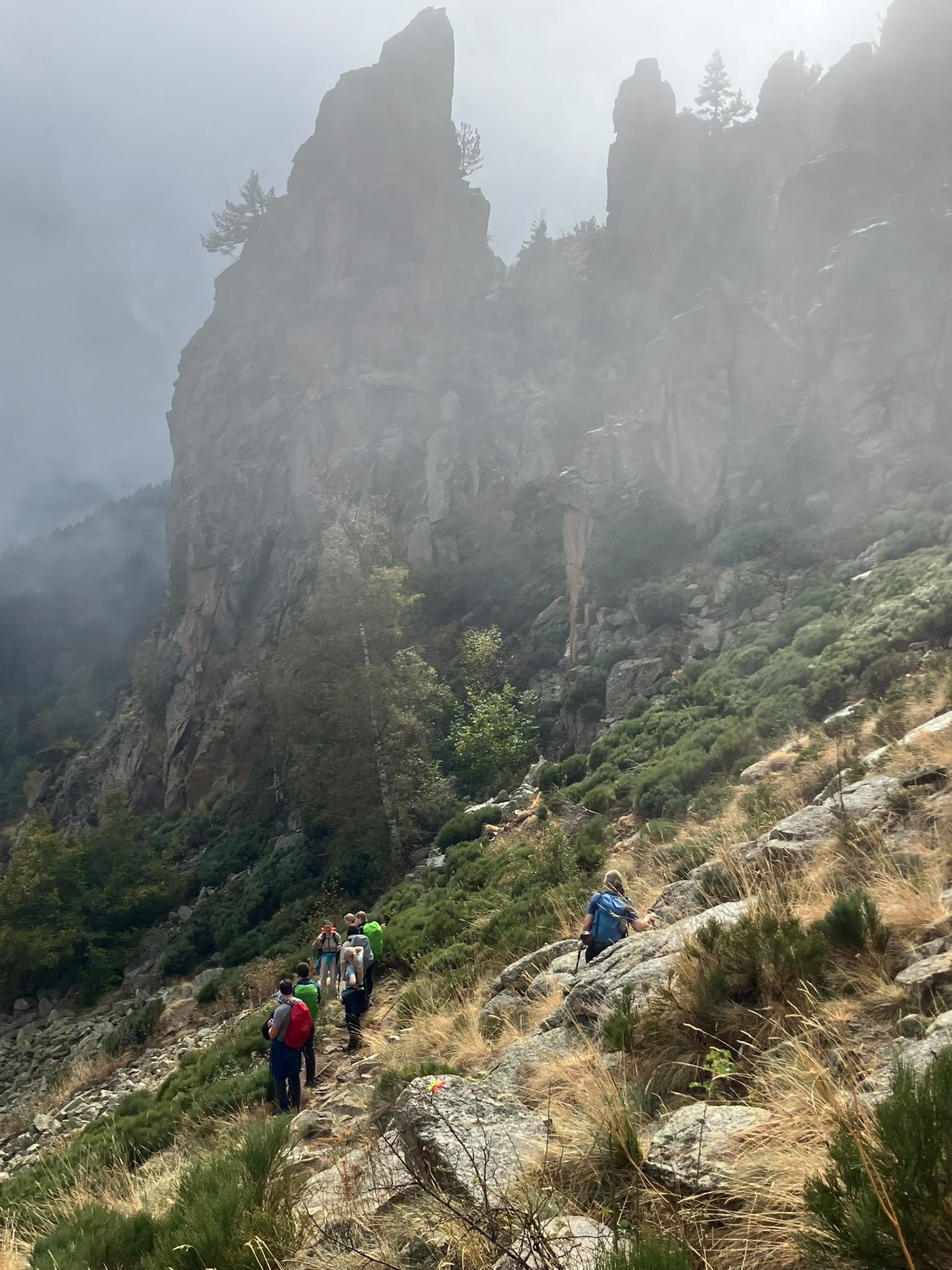
The Trek
We gathered in Perpignan, France, and set off for the village of Mantet. There we stayed at a small inn run by Erica, who made us ollada, a Catalan stew, and served sheep’s cheese from the next-door farm. Her table turned out to be a wonderful place for the young women to get to know the former intelligence officers in our group, and they started asking about our years in national security right away.
Before we left, Erica told us the main road didn’t reach Mantet until the 1960s. Mountains and poor roads slowed any army trying to move through, so the area became a stronghold for the maquis, the French Resistance fighters. We quickly experienced why it was such a great place for escape and evasion.
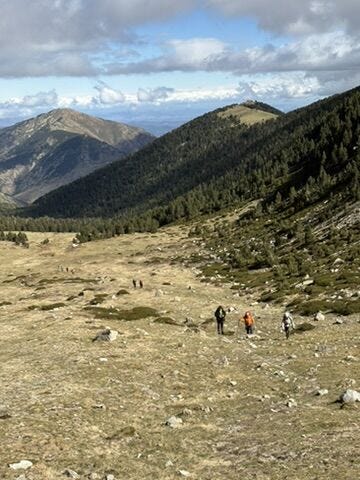
The next morning we set out to cross the Portella de Mantet, a pass close to 8,000 feet. It was a hard day. All of us were out of breath and moving slowly, especially on the steep switchbacks near the top. Reaching the pass and stepping from France into Spain was a special moment; it was a relief to be looking down rather than up. And we all thought about how Virginia Hall must have felt in that same spot in November 1942, looking back on what she was fleeing and looking forward into Spain, not knowing what was next.
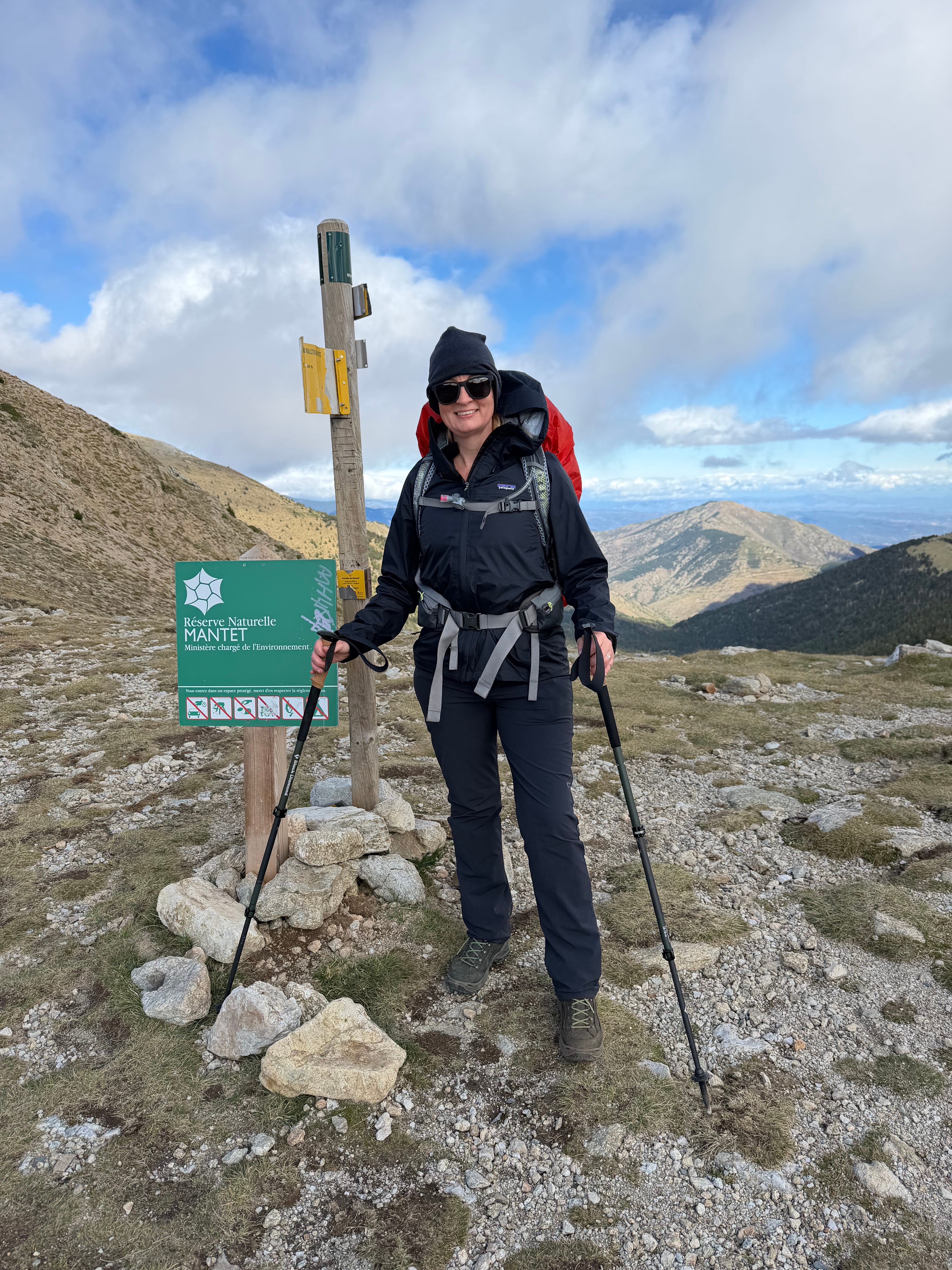
From the pass, we followed the River Ter down, first into the Spanish village of Setcases and then on to Camprodon, where we finished. My Garmin says we covered about 31 miles over four days and averaged about 3,000 feet of climbing per day. The relationships we built will stay with me longer than any of those numbers, and I hope we offered something lasting to two young women who want to serve.
Where the money went
Our donors raised a total of $10,500. That paid for the two young women’s airfare, gear, lodging, and meals. We also put them up in Barcelona for two nights after the trek concluded so they could explore the city. We have $1,900 left over, and you’ll see below how we plan to use it.
What’s next
At CIA, my work gave me a deep sense of meaning, and it made up for the long hours, the mental and emotional strain, and at times the physical danger. When you leave, it’s a bit like being a fish out of water. This trek reignited that meaning for me. It meant a lot to talk about Virginia Hall, and about my own years at CIA, with people who hope to follow that path.
I’m planning to lead another Virginia Hall hike in late spring once the snow clears. We’d like to bring more participants this time, possibly six, and open it to a few young men as well. The remaining $1,900 will go toward making this recurring event a reality.
Sending one young person on this trip costs about $4,300. Whether you gave last time or this would be your first gift, any amount moves us closer to bringing six people next spring. If you’d like to help make the next hike happen, please click below. Donations are tax deductible through Culper, a 501(c)(3) alumni organization for intelligence professionals.
DONATE HERE
Thank you,
Laura